Winter Passing
2006
This was the official website for the 2006 movie, Winter Passing.
Content is from the site's 2006 archived pages as well as from outside sources.
Winter Passing (Official Trailer in HD)
Cast
Ed Harris as Don Holden
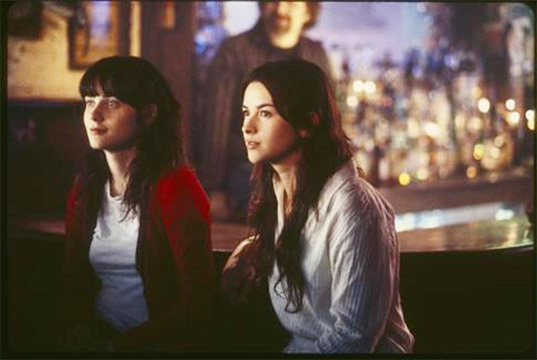
Zooey Deschanel as Reese Holden
Will Ferrell as Corbit
Amelia Warner as Shelly
Amy Madigan as Lori Lansky
Written and directed by
Adam Rapp

REVIEWS
WINTER PASSING
March 9, 2006
Roger Ebert | www.rogerebert.com/
Reese didn't attend her mother's funeral for a number of reasons, one of them being "she treated me like a mild curiosity all my life" and another being that she has little desire to see her father. Reese lives in New York, works at being an actress, sleeps around, is depressed. Her father, Don Holden, was a famous novelist in the 1960s and 1970s and then a famous writing teacher and then a famous drunk and now is a famous drunken recluse. The usual trajectory. Her mother was a writer, too. Did her parents write letters to each other? An editor offers her money for the letters, and Reese needs money. Also, there's nothing to keep her in New York now that her cat has died of leukemia.

"Winter Passing" is the story of how Reese (Zooey Deschanel) takes the bus to the Upper Peninsula of Michigan and finds her father, Don Holden (Ed Harris), living not in the family home but in the shack in the backyard. When she knocks on the front door of the big house, it is opened by Corbit (Will Ferrell). Reese says she wants to see her father. Corbit says he wants to see some ID. Later in the movie he confides, "I know karate. I've amassed several belts."
Corbit is the caretaker, or something. Also living in the house is Shelly (Amelia Warner), a British girl who cooks and serves meals and was once Don's writing student at Iowa. What are the relationships among Don, Corbit and Shelly? Don is mired in a profound alcoholic depression, and Corbit and Shelly seem, like Bunuel's dinner guests in "The Exterminating Angel," to have entered the house, only to find themselves unable to leave it. Shelly is maybe an enabler. Corbit is maybe an alien. Reese is suspicious of them until she lives in the house for a few days and begins to understand its desperate chemistry.
"Winter Passing" is a sad story told in a cold season about lonely people. Written and directed by the playwright Adam Rapp, it could be inspired by any number of case histories; Frederick Exley (A Fan's Notes) comes to mind. There is something about a great author, even in the extremities of alcoholic self-destruction, that exerts a magnetic pull on those who respect his books. The house itself is filled with so many books that you wouldn't ask, "Have you really read all of these"? because you'd be afraid of the answer either way. Only one title is clearly visible among the thousands of volumes, but it's the right one: The Thirsty Muse.
Rapp tells the story in a way that skirts the edges of humor and affection. Approached in a different way, the movie could be a comedy of eccentricity. But Rapp sidesteps the temptations for laughter while acknowledging them out of the sides of his eye. Consider the carefully-modulated performance of Ferrell, whose very presence is an invitation to laughter. Here he finds a way to be peculiar without being ridiculous; he has deep fears and needs, enclosed in a deeper shyness. He can sing and play the guitar but has a phobia about doing both at once in public. That leads to open mike evening at the local bar, and a scene almost impossible to negotiate, but Ferrell and Deschanel find a way. And notice his aborted project to build a sheltered walkway from the shack to the main house. He starts it on an impulse, and the impulse fades. Nor does he seem to know much about carpentry.

Harris has played alcoholic artists before; his Oscar-nominated turn as Jackson Pollock is a benchmark. Here there is alcoholism mixed with madness. Why, exactly, does he move his bed and table and bureau into the yard and sleep under the sky in the deep of winter? Yet the presence of his daughter seems to awaken him, if only to allow him to let go. Shelly confides in Reese that the old man is still writing, but slowly: "As a teacher, he was always preaching compositional velocity. I've never seen anyone agonize over each sentence the way he does."
This is the kind of movie routinely dismissed as too slow and quiet by those who don't know it is more exciting to listen than to hear. It is sure to disappoint those attracted by the promise of a Will Ferrell comedy -- disappoint, puzzle, maybe enrage. What you hope for are those Ferrell fans who are open to a new kind of film they may not have seen before. That's how you grow as a filmgoer; your favorite stars lead you by the hand into deeper waters.
###
Winter Passing
Mar 10, 2006 | Rating: 3/4
Walter V. Addiego San Francisco Chronicle Top Critic

Drama. Written and directed by Adam Rapp. With Ed Harris, Zooey Deschanel, Will Ferrell, Amelia Warner. (R. 98 minutes. At Bay Area theaters.)
This flawed drama about a self-destructive young actress and her reclusive novelist father has its rewards, mainly in some good performances. Dramatist Adam Rapp, making his film-directing debut, based it on his own two-act play, and the result, if stagey and occasionally sentimental, is worth seeing.
The opening goes into maybe too much detail about the sad existence of Reese (Zooey Deschanel), who's scrabbling to make it in New York's fringe theater scene, using cocaine, sleeping around and living a generally self-destructive life. On her mother's death, Reese is offered serious money by a book agent for the love letters of her estranged dad (Ed Harris), an alcoholic writer living in retreat in Michigan's Upper Peninsula.
(Don't be surprised if you're reminded of J.D. Salinger; the Harris character's name is Dan Holdin, close enough to Holden Caulfield to make the point hard to miss. Just to add to the fun, actress Deschanel is named after Salinger's character Zooey.)
When Reese arrives at Dad's door to find the letters, she learns not only that he's moved into his garage but also that the household is more or less ruled by a couple of newcomers (to her): Corbit (Will Ferrell), a quirky ex-Christian rocker who functions as bodyguard and handyman, and Shelly (Amelia Warner), a young British woman who's an ex-student of Dan's and works as housekeeper (and maybe more). Reese clearly resents her father's new "family."
She will, of course, learn a thing or two about her dad, as well as his caretakers, who turn out to be something other than interlopers.
Harris, the big name in the cast, does a decent job as the genius in serious decline, but the role lacks complexity. The picture really belongs to Deschanel, an appealing performer with a deadpan manner that serves her shell-shocked character pretty well. She has some maturing to do as an actress, but overall it's a creditable job. For Ferrell (who worked with Deschanel in "Elf") this is an unusually serious role, but he brings a quirky humor to this very odd duck of a character.
You can carp about this picture -- the suffering-artist motif is pretty heavy-handed and the upbeat ending isn't quite convincing -- but it's a pleasingly small-scale offering with some nice rewards for the viewer willing to overlook its problems.
-- Advisory: Profane language and scenes of sexual activity and drug use.
-- Walter Addiego

TOMATOMETER Critics 40% | Audience 62%
RottenTomatoes CRITICS REVIEWS
Mar 9, 2006
Desson Thomson Washington Post Top Critic
Winter Passing is one dull, extended encounter session among hackneyed characters.
###
Mar 9, 2006 | Rating: C+
Mario Tarradell Dallas Morning News Top Critic
It's a disturbing movie, particularly the first half, and one not easily digested.
###
Apr 7, 2006 | Rating: 2.5/4
Lawrence Toppman Charlotte Observer
Performances keep the film afloat and focused whenever it threatens to drift.
###
Mar 11, 2006 | Rating: 2.5/4
Allison Benedikt Chicago Tribune Top Critic
Midway through, Rapp loses momentum, failing to hone in on just what kind of movie he wants to make, and Winter Passing languishes in that no-man's land between tiny, meandering, indie drama and plotted, pointed family melodrama.

###
A lost soul looking to turn the page
By Ty Burr, Globe Staff | March 10, 2006
''Winter Passing" plays like two indie movies trapped in one film, and Zooey Deschanel is in the better of them. Will Ferrell is in the other one.
A quiet, minor-key drama of family resentments and the afterburn of fame, it's the first film written and directed by the gifted young playwright Adam Rapp (''Nocturne," ''Stone Cold Dead Serious"), who moves tentatively into this medium like he's sizing up a new house. There are intriguing actors and ideas here, but only occasionally do they combine with convincing force.
At its core, ''Winter Passing" is a character study of Reese (Deschanel), a glum and rootless young Manhattan actress wondering what to do about her inner numbness. Cocaine and impulsive sex don't make her feel anything; neither does slamming her hand in a drawer. Only a visit from a predatory book agent (Amy Madigan) rouses her to action.
Reese's father (Ed Harris), it turns out, is the legendarily reclusive American author Don Holden -- thud goes the J.D. Salinger reference -- and the agent dangles a big payday in front of the young woman if she'll return to Michigan and bring back a box of letters between Don and his wife, an equally well-known writer who committed suicide several years before. Reese didn't go to her mother's funeral and bristles at the reverence with which others invoke her father; fiercely protective of him, she still finds the whole ''Don Holden" thing pretty silly. But off she goes, mostly out of fear of what's happening to her in New York.
What she finds back home are three lives even more out of kilter than her own. Don, an alcoholic wraith, can barely motivate himself out of bed in the morning. He has taken in a former student, Shelley (Amelia Warner), who feeds and cares for him, and an odd young groupie named Corbit (Ferrell), a former Christian rocker who acts as Don's front-line defense against the Holden fanatics. Corbit asks for Reese's ID when she turns up at the door. ''Seriously?" she asks. ''Seriously."
''Winter Passing" becomes a standoff between Reese and these interlopers -- and between Reese and her father, whom she still blames for a wrecked childhood -- that imperceptibly shades into muted reconciliation. Rapp has a nice touch for characterizations and offhanded dialogue, as well as for scenes that organically relate to his heroine's emotional dilemma. When Reese drags a dead deer off a back country road late in the film's running, she's clearing more than venison from her path.
The film's momentum stalls, though, because everything hangs on whether Reese will find the letters and what she'll do when she finds them. In the character-driven tap dance leading up to those scenes, different acting styles collide like flying hams. Harris, resembling a literary hillbilly patriarch, broods and tries to explode, but Don is a spent force. Warner insinuates herself so that you're never sure whether Shelley is more or less than she seems. (It turns out she's more, but you never quite believe it.)
Ferrell, grabbing at the chance to do something serious, is the square peg. He's badly miscast, for one thing -- when Corbit talks about his hapless Christian rock past, you can't help but think of Ferrell's ''SNL" cowbell guy -- and his comic weirdness trips up the movie's delicate vibe. He's acting in a broader film than the other actors -- something closer to ''Garden State" than ''Chilly Scenes of Winter."
Deschanel nails it, though. Reese is not a particularly likable woman-child, and she can be brutal to people and things she no longer has use for (that includes herself), but Rapp has written into her a spark of tenderness that's on the verge of going out forever. Almost invisibly, the actress fans it until it begins to glow and you understand that the winter that's passing is hers.

RottenTomatoes Audience REVIEWS
***** Leigh Ryan Leigh Ryan
Super Reviewer
Head over heels in love with this movie. It's slower paced, it's heavy, but it's brilliant. The acting is so natural and beautifully done that you forget that these people are not real. Zooey really is a superb actress and this film seriously shows her ability to pull anything off. My favorite movie of hers so far without a doubt. The best line in the movie: "I just can't believe this is the same man who told his six-year-old daughter that Christmas was a Republican capitalistic conspiracy created by the Hallmark Corporation and that, if Jesus were alive today he'd be down in Nicaragua rallying the Sandinistas. Grace away." I laughed so hard that I had to go back and play the five minutes after that line to re-watch what happens.
+++
*** Margo Conway
Super Reviewer
I really enjoyed this film for all the right reasons, acting was great, ditto plot, photography excellent. But the New York City portions made me feel like I was reliving something that really happened. There was a con man named George Binakis, who defrauded older people by posing as contractor promising to renovate their apartments. He took one lady for over $65,000 and completely won her trust and sympathy by feigning a severe heart ailment, always talking of his pacemaker, etc. When he walked off with her money, her first and only thought was that he had died or was terribly ill. This film plays directly to this real life theme in a number of ways and I could not watch it without relating to the con - the characters all seem to fit together exactly as the fraud did in reality. But you don't have to have had my experience to enjoy it. Go see it and keep my comments in the back of your mind - you'll see why I'm including them in this review.
+++
** ½ Lewis C. Lewis C.
Super Reviewer
Ah, another tale of a lost, disaffected young person that fruitlessly tries to fill their empty life with empty sex and drugs, and the family dynamics that led them to become that way. You know how these stories go. By the end, there's always some kind of acceptance and catharsis, and the characters end up with better relationships than when they started. Since most family dramas begin and end in somewhat the same manner, it's that middle journey that makes or breaks them, for me. How and why do the characters change? Winter Passing largely skips right over the how and why. For 90% of the movie Zooey Deschanel's and Ed Harris's characters are one way, and then in the last ten minutes they are suddenly completely different. I was so confused that I went back to check and see if I had unknowingly missed some crucial plot points or character development, but I hadn't. The viewer is actually expected to believe that these characters undergo profound and drastic changes as a result of about two brief conversations and a hospital visit. It's like they took a vague idea of a plot, and then filled in the runtime with melancholy gazing out of windows and lots of slow cigarette smoking. As for the other two main characters, they never really contributed anything of substance to the story. I suppose Amelia Warner's character was included to provide some initial friction for Reese and offer her another insight into her father's personality, and she looked so beautiful doing it that I'm willing to cut her some slack. But Will Ferrell's character was completely unnecessary. All he did was add forced quirkiness to a movie that absolutely did not need it. It didn't even fit the tone, and his sub-plot was a pointless way to pad out the running time. I didn't hate Winter Passing, I just thought that its story needed a lot more thought, focus, and fleshing out. It feels incomplete. Family drama is among the most character driven genres, and they just don't work well without strong and well-defined character arcs.
+++
**** Jake
Super Reviewer
Winter Passing is so easy to fall in love with that it almost seems like there should be a catch. All the characters are delightfully off-color and messed up. Zooey Deschanel gives what is probably her best act yet, but also plays out of those protagonists that really are not *nice* people at all and are all the more lovable because of it. She has flaws and problems, but you cannot help but love her. Will Ferrell is not bad, I never thought I would have reason to say that. He should stick to these type of roles. The film really is not heart-stoppingly original. It reminded me a lot of Junebug or even Little Miss Sunshine. I guess you could say that this type of film, the stereotyped indie film, is to me what a rom-com is to a twentysomething romantic. Or to a high school cheerleader. It's a toss up between the two. One final note, this also has a scene that me cringe, something that hardly ever happens, but at the begin Deschanel drowns a kitten! That is just sick! It is easy enough to laugh of Johnny Depp slashing throats, but drowning kittens is just nasty!

+++
***** yayy p February 19, 2007
bravo to ms. Deschanel
+++
***½ Jared J February 19, 2007
A different film in terms of the story, but the characters are really interesting, especially Will Ferrell and Zooey Deschanel.
+++
***½ Super Reviewer
Christopher M February 19, 2007
I liked this film. I expected to love it, but I just liked it. It's kind of a hard film to connect to, at first and throughout - but all the same Zooey Deschanel's character Reese is pretty much our main link throughout the film and though I haven't seen any of her other work, she was really good here, and it is quite a beautiful woman. The cast is very good but none of the others characters get to do a lot. However, they were all entertaining and interesting in their own ways. Ed Harris put in a very respectable performance as the Reese's father, the recluse writer. Will Ferrel's character was very downplayed but effective, and here he simultaneously reinforces his ability to be a completely down key source of humor and proves to be effective at drama. The story is ultimately unimportant as it serves mostly as a backdrop for the four main characters - ultimately this is a depressing film full of depressing characters (heck, even the title is depressing), but I liked it and I'd probably recommend it.
+++
**** Prita P February 16, 2007
A gloomy story of a gloomy chick looking for something she wants, but then find what she needs.
+++
****½Taeo A February 12, 2007
"Corbit... are you wearing eyeliner?"
+++
** Caleb B February 12, 2007
Disappointing. Will obviously made us laugh. Was werid seeing Zooey playing that part. Kind of a messed up movie if you ask me.
+++
*** Justin M December 21, 2006
A good little movie that plays a bit like an 'indie' prototype. Reese Holdin (Zooey Deschanel) comes home to her estranged father Don (Ed Harris) after a publisher offers her $100,000 to print a series of love-letters written by her mother and father, both famed novelists. Pulling up to the house, she's met by Corbet (Will Ferrell), a middle-aged guitar player who's looking after the house now that Don's moved his things out to the garage. Falling apart under the weight of his wife's suicide, it's a small but involving role that Harris plays quite well. He gets top billing in the cast, but the movie really belongs to Deschanel, whose Reese is literally in every scene. The movie follows her journey as she struggles to reconnect with a father she barely knew, and must decide whether or not to exploit him for a big pay-day.
That's about it. The overall theme or meaning of the movie is mostly lost on me, but I definitely enjoyed watching it. It's well-acted, and Ferrell is great in a rather subdued role that's touching and funny without ever being loud. There are a few great dramatic scenes in the movie (Reese's final scene with her sick cat is a heart-breaker and Deschanel plays it well), but things get a bit rushed in the final act, as Rapp pushes the movie towards the finish line, dodging a bit of slow set-up stuff that made the opening work so well.
Does this movie demand viewing? No, not really. But I'm glad I saw it.
+++
*½ Chris b December 13, 2006
The film made me feel sick. Ed Harris, Zoey and Will Ferrell are great, however the drama in the film seems so forced with no emotion and some it is for pure shock value. And besides the occasional chuckle from ferrell its not enjoyable either. Avoid at all causes
+++
** Super Reviewer
William G December 8, 2006
Zooey mopes around. Harris mopes around. Ferrell mopes around. Repeat.
+++
***½ Carissa December 6, 2006
The plot stalls out in some places and the film is pretty typically an "indie", but the acting is good and it's fun to see Will Ferrell play and out-of-type character. I liked the music, too!
+++
***½Stephanie B November 25, 2006
It was weird, but quite interesting. Will Ferrell actually plays serious really well
+++
*** Jamie F November 21, 2006
I wanted to like this movie more but most of the time it just comes off as being an average drama. However it helps that Zooey Deschanel is in every scene.

More Background On WinterPassing-Movie.com
WinterPassing-Movie.com was the official promotional website for Winter Passing, a 2006 American independent drama starring Zooey Deschanel, Ed Harris, Will Ferrell, and Amelia Warner. Written and directed by playwright Adam Rapp in his feature-film directing debut, the movie explored family estrangement, grief, artistic identity, addiction, and the difficult process of emotional reconciliation. Although it never became a mainstream box-office success, Winter Passing attracted attention for its unusual cast, melancholy atmosphere, and willingness to explore uncomfortable relationships without offering easy answers.
The website originally served as an online destination for people interested in learning about the film, its performers, and its theatrical release. Its later preservation as an archival resource gave WinterPassing-Movie.com a second purpose: documenting an independent film from the mid-2000s and making its history accessible to viewers, researchers, and students of cinema. The site's material, together with contemporary newspaper reviews, film databases, and entertainment coverage, provides a useful perspective on how Winter Passing was introduced to audiences and how its reputation developed after release.
Origins and History of WinterPassing-Movie.com
WinterPassing-Movie.com emerged during a period when dedicated movie websites were an important part of film promotion. In the early and mid-2000s, distributors frequently created standalone websites for individual theatrical releases, allowing audiences to explore trailers, cast information, production details, photographs, and publicity materials. For smaller independent films, these sites offered a relatively inexpensive way to establish an identity beyond newspaper advertising, film listings, and theatrical posters.
The website was associated with the 2006 release of Winter Passing, a film whose principal appeal was its character-driven story and recognizable cast rather than spectacle or conventional entertainment. The title itself established the mood of the production, suggesting the passage of a difficult emotional season and the possibility of change. The film's marketing had to communicate this somber subject matter while also attracting viewers familiar with actors whose previous work ranged from independent drama to mainstream comedy.
The original website eventually ceased functioning as an active theatrical promotional platform. It was subsequently restored as a historical and educational resource, retaining material associated with the film and collecting reviews and other background information. The restored website describes its preservation as supporting film coursework, reflecting the continuing usefulness of older promotional websites as records of film history and media culture.
This distinction between the original promotional site and its later restoration is important. The website's current educational presentation should not automatically be interpreted as evidence that its present administrators were responsible for the original theatrical campaign. Likewise, the site's later use as an archive does not establish that it remains officially operated by the film's distributor or original production companies.
The Film's Creation and Adam Rapp's Directorial Debut
Winter Passing was written and directed by Adam Rapp, an American playwright, novelist, and filmmaker known for emotionally intense stories about troubled individuals, damaged families, and people living on the margins of conventional society. Before directing the movie, Rapp had established himself in theater with works including Nocturne and Stone Cold Dead Serious. His dramatic writing frequently examined loneliness, self-destructive behavior, and the ways people struggle to communicate their most painful experiences.
The film represented Rapp's transition from theater into feature filmmaking. That background is evident in the production's emphasis on dialogue, interpersonal tension, and relatively confined settings. Much of the story depends on the interactions of a small group of characters living together in an unusual household. Rather than relying on elaborate action or complicated plot developments, Rapp allows conversations, silences, gestures, and emotional confrontations to reveal the characters' histories.
Contemporary critics noticed the theatrical qualities of the screenplay. Some regarded its stage-influenced structure as an advantage because it gave the actors opportunities to develop their characters through extended exchanges. Others believed that the movie occasionally felt too confined or lacked the narrative momentum expected from a feature film. This disagreement became one of the recurring themes in the critical reception of Winter Passing.
The film is particularly interesting when viewed in the context of American independent cinema during the 2000s. At a time when smaller productions frequently explored alienation, unconventional families, and emotionally uncertain young adults, Rapp's movie offered a distinctly literary interpretation of those subjects. Its characters are connected not only by family relationships but also by books, writing, intellectual ambition, and the sometimes destructive mythology surrounding celebrated artists.
Story and Plot: A Daughter Returns to Her Estranged Father
The central character of Winter Passing is Reese Holden, played by Zooey Deschanel, a struggling actress living in New York City. Reese is emotionally isolated, financially unstable, and uncertain about the direction of her life. Her existence is marked by casual relationships, substance use, and a profound inability to connect with the people around her. She also carries unresolved feelings about her parents, both of whom achieved recognition as writers.
Her father, Don Holden, portrayed by Ed Harris, was once a celebrated novelist and writing teacher. Over time, however, alcoholism, grief, and withdrawal from public life have transformed him into a deeply troubled recluse. Reese's mother, also a writer, has died, leaving behind painful memories and a complicated family legacy. Reese's estrangement is so severe that she did not attend her mother's funeral.
The story begins to move forward when a publishing representative approaches Reese with a potentially lucrative proposition. She is offered a substantial payment in exchange for obtaining correspondence between her parents. These private letters are considered commercially valuable because of the couple's literary reputations. For Reese, who needs money and has little stability in her life, the offer provides both a financial opportunity and a reason to return to the family home.
Reese travels from New York to Michigan's Upper Peninsula, where she discovers that her father's household has changed dramatically. Don is no longer living normally in the main house, and two unfamiliar people have become central to his daily existence. Corbit, played by Will Ferrell, is an eccentric former Christian rock musician who acts as a caretaker and protective presence. Shelly, portrayed by Amelia Warner, is a young British woman and former writing student who helps care for Don.
Initially, Reese regards these individuals with suspicion. She questions their motivations and resents their apparent closeness to her father. Yet as she spends time in the household, she begins to understand that the relationships are more complicated than they first appear. Corbit and Shelly have their own vulnerabilities, and their attachment to Don reflects a combination of admiration, dependency, loneliness, and genuine concern.
The search for the letters provides the film with a narrative framework, but the deeper story concerns Reese's changing understanding of her father and herself. She must confront the emotional consequences of growing up in a family dominated by literary ambition, psychological instability, and unresolved resentment. The film gradually shifts from suspicion and hostility toward the possibility of acceptance, without suggesting that years of emotional damage can be completely erased.
Cast and Performances
One of the film's strongest selling points was its ensemble cast, which brought together established dramatic performers and actors more commonly associated with comedy or unconventional independent productions.
Zooey Deschanel's performance as Reese Holden anchors the movie. Her character appears in nearly every scene, requiring her to portray emotional detachment, anger, vulnerability, and gradual personal change. Deschanel was already attracting attention for performances in films such as Almost Famous and All the Real Girls, but Winter Passing gave her an opportunity to explore a darker and more psychologically complicated character.
Ed Harris plays Don Holden, the once-famous novelist whose personal deterioration has left him physically and emotionally isolated. Harris brought considerable dramatic credibility to the role, having previously portrayed troubled artist Jackson Pollock in Pollock, a performance that earned him an Academy Award nomination. His portrayal of Don emphasizes the contradictions of a man who was once intellectually powerful but can barely manage his own daily existence.
Will Ferrell's casting as Corbit was particularly notable. Audiences familiar with his work on Saturday Night Live, Elf, and Anchorman might have expected a broadly comic performance. Instead, Ferrell plays a socially awkward, sensitive man whose unusual behavior conceals genuine insecurity. Corbit's musical interests, protective instincts, and difficulty expressing himself create moments of understated humor without transforming the film into a comedy.
Amelia Warner plays Shelly, whose relationship with Don initially raises questions about loyalty, dependency, and emotional boundaries. Amy Madigan portrays Lori Lansky, the publishing representative whose offer sets Reese's journey in motion. Together, these supporting performances help establish the film's central conflict between personal relationships and the commercial value attached to a famous writer's private life.
Production Companies, Ownership, and Distribution
The film was associated with Stratus Film Company and Mint Pictures, with production credits identifying P. Jennifer Dana and David Koplan as producers. The American Film Institute catalog also identifies Focus Features in the film's production and distribution history. The theatrical release was ultimately handled by Yari Film Group Releasing, which brought Winter Passing to American cinemas in February 2006.
The distribution history reflects the sometimes complicated process of bringing independent films to theaters. A project can secure recognizable performers and attract interest from established distributors while still experiencing delays, changes in distribution arrangements, or limited marketing resources. Winter Passing illustrates this pattern, moving from production and festival exposure to a relatively small commercial release.
Ownership of the movie itself should be distinguished from ownership of WinterPassing-Movie.com. Production companies, distributors, and rights holders may control different aspects of a film, including theatrical distribution, home entertainment, television licensing, and promotional materials. The domain's original registration and its subsequent restoration do not, by themselves, establish continuous ownership by any particular film company.
Publicly available material does not provide a sufficiently documented chain of domain ownership to identify every registrant or administrator since the site's creation. What can be established is its historical association with the movie's promotional presence and its later use as an archival reference.
Release History, Film Festivals, and Theatrical Exhibition
Although commonly identified as a 2006 movie, Winter Passing had an earlier festival history. It premiered at the 2005 Toronto International Film Festival, an important showcase for independent and international filmmaking. Festival participation offered the production an opportunity to reach critics, industry professionals, and audiences before its wider commercial introduction.
The film opened in the United States on February 17, 2006, through a limited theatrical release. Unlike major studio productions that debut on thousands of screens, Winter Passing initially appeared in only seven theaters. Its exhibition subsequently expanded and contracted, reaching a maximum of approximately 11 theaters according to Box Office Mojo.
Los Angeles screenings included established venues such as the Sunset 5 on Sunset Boulevard, the Monica 4 in Santa Monica, and the Playhouse 7 in Pasadena. These theaters were part of the metropolitan area's network of cinemas serving audiences interested in specialty releases and independent productions.
The film received an R rating for language, some drug use, and sexuality. Its running time was approximately 98 minutes. The adult rating and difficult subject matter reinforced its position as a drama aimed primarily at mature audiences rather than family entertainment.
The theatrical release also demonstrates the importance of geography in independent-film distribution. Major metropolitan markets such as Los Angeles and New York offered access to film critics, specialty theaters, and viewers more accustomed to unconventional storytelling. Smaller films often depended on these markets to establish their reputations before expanding to other cities or moving into home entertainment.
Box Office Performance and Commercial Popularity
Winter Passing achieved only modest commercial results. According to The Numbers and Box Office Mojo, its domestic theatrical gross was approximately $107,492, while international receipts contributed another $6,291, producing a reported worldwide total of $113,783. The Numbers lists a production budget of approximately $3.5 million, indicating that theatrical revenue represented only a small fraction of the film's reported production costs.
The opening weekend generated $28,091 from seven theaters. This limited initial release was consistent with the film's specialized appeal, but the subsequent theatrical performance did not produce the sustained audience demand necessary for a significant expansion. Its commercial results suggest that the recognizable cast was not enough to overcome the challenges of marketing a quiet, emotionally demanding drama.
However, theatrical box office figures do not capture every form of a film's financial or cultural performance. Home-video distribution, television licensing, streaming availability, and later digital rentals can extend a production's commercial life well beyond its original theatrical engagement. The available box office figures should therefore not be interpreted as a complete accounting of all revenue earned by the movie.
The film's popularity is better understood as a combination of limited initial attendance and continued interest among independent-film viewers. Its appearance in film databases, streaming catalogs, critical retrospectives, and archived promotional material indicates that it remained accessible and discussable long after its original release.
Critical Reviews and Press Coverage
Critical reception was mixed, with reviewers frequently praising the performances while questioning the screenplay's pacing and emotional development. Rotten Tomatoes reports a 40% critics' approval rating from 52 reviews, while Metacritic lists a score of 56 out of 100, reflecting a divided but not uniformly negative response.
Roger Ebert offered one of the film's more favorable assessments in his March 9, 2006 review. He appreciated its quiet observation of lonely people and its balance of sadness, affection, and occasional humor. Ebert was particularly interested in Ferrell's restrained performance, recognizing that the actor had found a way to create an unusual character without relying on his familiar comedic techniques.
Walter V. Addiego of the San Francisco Chronicle awarded the film three out of four stars. His review acknowledged weaknesses in the screenplay and some sentimental tendencies but considered the performances sufficiently engaging to make the movie worthwhile. Deschanel's portrayal of Reese received particular attention, as did Ferrell's departure from his established screen persona.
Other reviewers were less enthusiastic. Ty Burr of The Boston Globe believed the film contained promising characters and ideas that did not always work together convincingly. His criticism focused partly on the contrasting acting styles, especially the difficulty of integrating Ferrell's eccentric character into the movie's otherwise subdued dramatic atmosphere.
The Chicago Tribune also questioned the film's narrative direction, suggesting that Rapp struggled to balance a loosely structured independent character study with a more conventional family melodrama. Critics writing for the Washington Post and other publications expressed frustration with the film's familiar themes and deliberately slow pace.
The Los Angeles Times, meanwhile, recognized strengths in Harris's performance and the distinctive atmosphere Rapp created. Such responses illustrate why Winter Passing generated disagreement: its understated approach could appear emotionally perceptive to one viewer and excessively self-conscious to another.
The range of coverage is significant because the movie received serious consideration from prominent national and regional publications despite its limited theatrical reach. Reviews in the New York Times, Los Angeles Times, Chicago Sun-Times, Boston Globe, San Francisco Chronicle, and Variety helped establish a lasting critical record.
Audience Reviews and Viewer Reactions
Audience reactions have also been divided, although viewer ratings have generally been more favorable than the professional critical consensus. Rotten Tomatoes reports an audience score of approximately 61%, based on more than 50,000 ratings. These figures suggest that the film found supporters who connected with its characters and atmosphere despite the reservations expressed by many critics.
Positive audience responses frequently emphasize Deschanel's performance, the naturalistic acting, and the unusual combination of personalities within the Holden household. Some viewers appreciate the movie precisely because it avoids conventional dramatic excitement. For these audiences, the slow pacing creates space to observe the characters' behavior and gradually understand their emotional difficulties.
Other viewers have criticized the same qualities. Complaints include insufficient character development, an uneven transition toward reconciliation, and scenes that appear designed primarily to establish a gloomy atmosphere. Some have also objected strongly to a disturbing early sequence involving Reese and an animal, finding the material unnecessarily upsetting.
Ferrell's performance remains another point of disagreement. Some viewers regard Corbit as one of the film's most memorable characters, appreciating the contrast between his awkward humor and the surrounding emotional darkness. Others believe the character distracts from the father-daughter relationship or introduces a tone that does not fit comfortably with the rest of the story.
These conflicting reactions are useful when evaluating the movie's legacy. Winter Passing is not a film that consistently satisfies conventional expectations about plot, pacing, or sympathetic protagonists. Its appeal depends heavily on whether viewers are willing to spend time with difficult characters whose emotional development is often communicated indirectly.
Themes of Family Estrangement, Grief, and Reconciliation
The emotional center of Winter Passing is the relationship between Reese and Don Holden. Their estrangement is not presented as the result of one easily identifiable event but as the accumulation of years of disappointment, neglect, and emotional distance. Reese has grown up in the shadow of two celebrated writers, yet their professional accomplishments have not translated into a stable or nurturing family environment.
The film explores the complicated experience of having a parent who is admired publicly but experienced very differently within the family. Don's literary reputation attracts respect and loyalty from outsiders, including Shelly and Corbit, while Reese remembers the personal failures behind that reputation. Her resentment challenges the assumption that artistic brilliance necessarily reflects wisdom, kindness, or emotional maturity.
Grief is another defining subject. The death of Reese's mother has left both father and daughter struggling with unresolved feelings, although they express their suffering in different ways. Don retreats into alcoholism and isolation, while Reese attempts to escape emotional pain through detachment and self-destructive behavior. Neither character has developed a healthy way of confronting loss.
The letters between Reese's parents provide a powerful symbol of this conflict. To the publishing world, they represent valuable literary documents that could reveal intimate details about famous writers. To Reese, they are simultaneously a financial opportunity, a connection to her family history, and a potential betrayal of personal privacy.
The possibility of reconciliation emerges gradually as Reese begins to recognize the humanity of the people she initially rejects. The film does not suggest that understanding automatically eliminates resentment. Instead, it presents emotional progress as a limited but meaningful change in perspective, allowing characters to acknowledge pain without necessarily resolving every consequence of the past.
Literary Influences and Cultural Significance
The literary world depicted in Winter Passing contributes substantially to its cultural identity. Don Holden belongs to a recognizable tradition of fictional American writers whose reputations are intertwined with isolation, eccentricity, and personal decline. His withdrawal from public life recalls the mythology surrounding J. D. Salinger, while the film's treatment of addiction and artistic self-destruction invites comparisons with other prominent literary figures.
Contemporary reviewers identified possible parallels with writers such as Ernest Hemingway, Jack Kerouac, and Frederick Exley. These comparisons do not establish that Don was directly modeled on any single author, but they demonstrate how the character draws upon familiar cultural ideas about literary genius and emotional suffering.
The film also questions the romantic image of the tortured artist. Don's achievements have earned him admiration, yet his personal circumstances are neither glamorous nor enviable. His household is dominated by practical difficulties, strained relationships, and the consequences of long-term withdrawal from ordinary life.
For film scholars, Winter Passing provides an example of the relationship between theater and independent cinema. Rapp's experience as a playwright shaped his approach to characterization, dialogue, and narrative structure. The resulting movie can be examined alongside other character-centered American independent films of the period, including Garden State, Junebug, and The Squid and the Whale, while recognizing the differences in their approaches to family conflict.
The movie also occupies an interesting place in the careers of its performers. Deschanel's portrayal of Reese contrasts with the more whimsical characters for which she later became widely known, while Ferrell's work as Corbit demonstrates his ability to perform outside broad comedy. These performances give the film continuing value for viewers interested in the artistic development and range of familiar actors.
The Role of Setting, Winter Imagery, and Cinematography
The contrast between New York City and Michigan's Upper Peninsula is central to the movie's atmosphere. New York represents Reese's unstable adult life, where she struggles professionally and moves through relationships without establishing meaningful connections. Michigan represents her family history, unresolved childhood experiences, and the emotional circumstances she has attempted to escape.
The northern winter setting reinforces the characters' isolation. Snow, cold weather, and the relative remoteness of Don's home create an environment that feels physically and psychologically removed from ordinary social life. The landscape also emphasizes the passage of time, suggesting that even periods of emotional stagnation may eventually change.
Cinematographer Terry Stacey helped establish the film's subdued visual character. Rather than emphasizing spectacular scenery, the photography supports the intimacy of the performances and the uncomfortable atmosphere of the Holden household. Domestic interiors, winter exteriors, and the contrast between occupied and abandoned spaces contribute to the story's emotional texture.
The house itself is especially important. Don's decision to withdraw from the main living area into an outbuilding makes his psychological retreat visible. Meanwhile, Shelly and Corbit occupy spaces that Reese might reasonably expect to belong to her family. The arrangement creates a physical representation of her displacement and her uncertainty about where she belongs.
The film's geographical setting should not be confused with the physical location of WinterPassing-Movie.com. The website is an online promotional and archival resource, not a Michigan visitor attraction or filming destination. Specific production locations should also be distinguished from the fictional places represented on screen.
Music, Atmosphere, and Will Ferrell's Unusual Role
Music contributes to the emotional character of Winter Passing, particularly through Corbit's background as a former Christian rock musician. His interest in performing offers an additional perspective on creativity, insecurity, and the difficulty of exposing oneself emotionally to others.
Unlike Don, whose literary reputation has become a burden, Corbit has not achieved significant artistic recognition. His relationship with music is more private and tentative. He possesses musical interests and abilities but struggles with the vulnerability involved in performing before an audience.
A sequence involving an open-mic performance becomes one of the movie's memorable examples of understated character development. The scene allows Ferrell to express Corbit's insecurity without relying on exaggerated comedy, while Reese's presence creates an opportunity for connection between two emotionally guarded people.
The soundtrack and musical atmosphere complement the movie's independent-film identity. Music functions less as a means of generating excitement than as a way of expressing moods that the characters find difficult to articulate. This approach is consistent with the film's larger interest in communication, emotional restraint, and the gap between artistic expression and personal relationships.
Awards, Recognition, and Film Industry Standing
Winter Passing did not become a major awards-season success, and available film records do not establish a significant collection of major competitive awards for the production. Its most important early industry recognition came through festival exposure and the attention of established film critics.
The 2005 Toronto International Film Festival screening placed the movie within an internationally recognized environment for discovering and evaluating new filmmaking talent. For Adam Rapp, the opportunity to present his first feature at such an event represented an important professional milestone, regardless of the movie's subsequent commercial performance.
The participation of performers with substantial film and television credentials also gave the project visibility. Harris was already an acclaimed dramatic actor, Ferrell was a major comedy star, and Deschanel was building a reputation through independent and studio productions.
The film's lasting recognition is therefore better measured through its place in the careers of its creative contributors and its continuing presence in film criticism than through awards or ticket sales. It remains an example of a relatively small production that attracted notable talent and serious press attention despite limited mainstream popularity.
WinterPassing-Movie.com as a Film Archive and Educational Resource
The restored WinterPassing-Movie.com provides a different experience from the original promotional website. Rather than primarily encouraging audiences to attend a theatrical screening, its archival presentation focuses on preserving information about the movie and its reception.
The available material includes a description of the film, principal cast information, references to its trailer, professional reviews, and audience commentary. This collection offers readers a convenient introduction to the production while demonstrating how different critics and viewers responded to the same work.
The site's educational value extends beyond information about Winter Passing itself. It can help students examine the differences between promotional material and critical interpretation, compare professional and amateur film criticism, and consider how a movie's reputation changes over time.
Its restoration also illustrates the broader importance of preserving older websites. Many promotional sites created for films in the 2000s disappeared after their theatrical campaigns ended. When such material is lost, researchers may have difficulty reconstructing how a movie was marketed, which performers were emphasized, and what information audiences could access during its original release.
Archived film websites can therefore serve as historical documents, preserving elements of digital culture that would otherwise be difficult to recover. WinterPassing-Movie.com is particularly relevant to researchers interested in independent cinema, early online film promotion, and the changing relationship between movie publicity and long-term digital preservation.
Website Content, Navigation, and Intended Audience
The website's preserved content is organized around the film rather than a commercial service. Its primary subjects include the movie's identity, cast, creative background, trailer, reviews, and critical reception. These categories serve a function comparable to the informational sections that appeared on many dedicated movie websites during the period.
Unlike a restaurant, retail store, or entertainment venue, WinterPassing-Movie.com does not have dining menus, physical admission facilities, or a customer-service location associated with its subject. Its most useful content consists of film information and materials that allow readers to evaluate the production's history and reputation.
The website can appeal to several overlapping audiences. Fans of Zooey Deschanel, Ed Harris, and Will Ferrell may be interested in discovering a lesser-known title from their filmographies. Independent-film enthusiasts may appreciate its unusual combination of literary themes and emotionally restrained storytelling. Film students can use the material to study performance, narrative structure, and critical reception.
Researchers investigating the development of online movie promotion may also find the site useful as an example of how a dedicated film domain can survive beyond its original marketing purpose. Its archival role connects a specific entertainment property with broader questions about digital preservation and access to cultural history.
Home Entertainment, Streaming, and Continued Availability
Following its limited theatrical release, Winter Passing became available through home entertainment. The Numbers records a May 16, 2006 video release through Fox Home Entertainment, allowing audiences who had not lived near participating theaters to discover the movie.
Home-video distribution was especially important for independent productions during the mid-2000s. DVD sales and rentals could introduce films to viewers who had never encountered their theatrical advertising, while rental services and specialty retailers made smaller productions accessible outside major metropolitan areas.
Digital distribution later provided additional opportunities for discovery. Rotten Tomatoes has listed the movie through services including Prime Video and Apple TV, although specific viewing options can change depending on licensing agreements, subscription arrangements, and geographical availability.
The film's continued circulation demonstrates that a limited theatrical release does not necessarily determine its long-term audience. Viewers may encounter Winter Passing years later through an actor's filmography, a streaming recommendation, a retrospective review, or a preserved website.
For contemporary audiences, the film offers an opportunity to revisit a particular moment in American independent cinema, when emotionally troubled young protagonists, unconventional family relationships, and understated storytelling were prominent features of many specialty releases.
The Lasting Legacy of Winter Passing and Its Website
Nearly two decades after its theatrical release, Winter Passing remains a distinctive entry in the filmographies of its principal actors and in Adam Rapp's development as a filmmaker. Its combination of literary themes, emotional discomfort, eccentric supporting characters, and restrained performances continues to invite contrasting interpretations.
The movie's commercial limitations and mixed reviews are important parts of its history, but they do not fully define its significance. For some viewers, its deliberately slow pace and difficult characters are obstacles. For others, those same qualities make it a thoughtful examination of grief, estrangement, and the complicated relationships between artists and their families.
WinterPassing-Movie.com preserves a connection to this history. Its transformation from a promotional destination into an archival resource demonstrates how websites originally created for short-term entertainment marketing can acquire a lasting documentary purpose. The film's reviews, cast information, and background material remain valuable to people researching the production or discovering it for the first time.
Ultimately, the website and the movie represent two related aspects of film culture. Winter Passing illustrates the artistic possibilities and commercial difficulties of independent filmmaking, while WinterPassing-Movie.com demonstrates the importance of preserving the digital records that help future audiences understand such productions. Together, they provide a window into the storytelling, critical debates, promotional practices, and cultural interests of American independent cinema in the mid-2000s.
